How to Increase the Website Traffic: A Complete SEO Guide
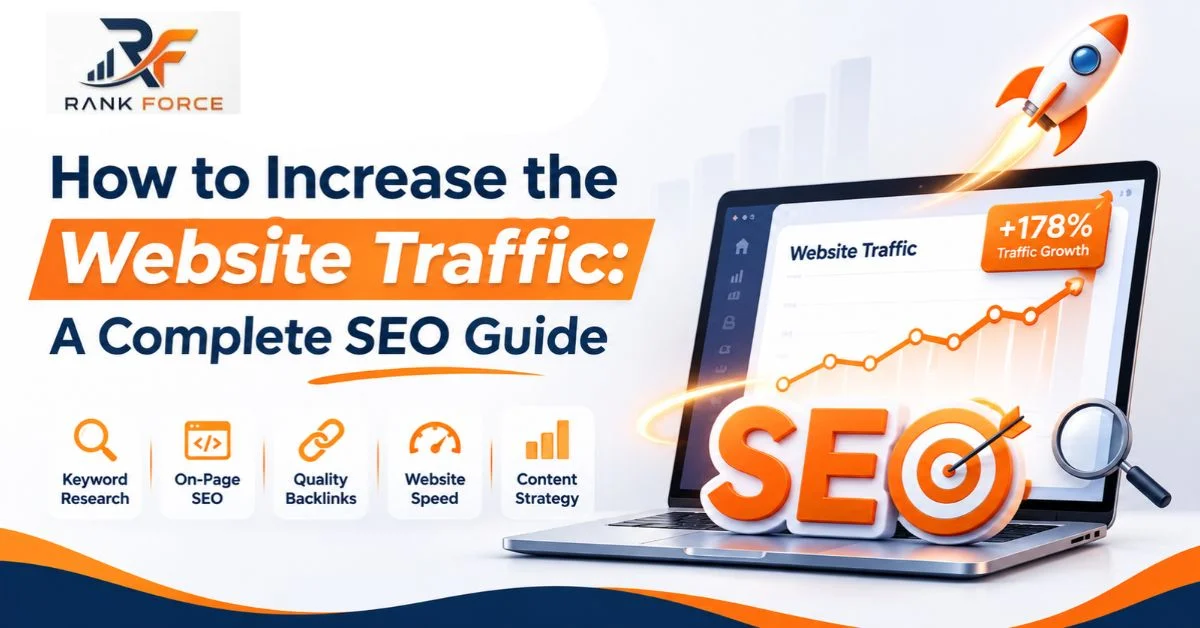
Every business owner asks the same question at some point. How to increase the website traffic without burning the entire marketing budget?
The good news is that traffic growth is not magic. It's a mix of smart SEO, consistent content, and a few technical fixes most sites skip — and if you're targeting a specific city or region, dedicated Local SEO Services can speed up the process considerably.
- You don't need a massive team to see results
- Small, repeated actions compound over months
- Search engines reward sites that solve real user problems
- Traffic growth is measurable, so you can track what works
This guide breaks down exactly how to increase the website traffic step by step, using tactics that actually hold up in 2026.
What Does It Really Mean to Increase Website Traffic?
Before chasing numbers, it helps to understand what "traffic" actually covers. It's not just visitors — it's the quality and intent behind every click.
- Organic traffic – visitors from search engines like Google
- Direct traffic – people typing your URL or using bookmarks
- how to increase the website trafficReferral traffic – visitors arriving from other websites or blogs
- Social traffic – clicks from platforms like Instagram, LinkedIn, or X
- Paid traffic – visitors from ads and sponsored placements
Most sustainable growth comes from organic search, which is why this guide focuses heavily on SEO fundamentals.
Understanding these traffic sources first makes every strategy below easier to apply correctly, since not every tactic affects each source the same way — this is also where solid Technical SEO Services make the biggest difference.
Why Website Traffic Matters for Your Business
More visitors don't automatically mean more revenue. But without visitors, revenue simply isn't possible in the first place.
- Higher traffic means more chances to convert visitors into leads
- Consistent traffic improves brand visibility over time
- Search engines trust sites that maintain steady visitor growth
- Traffic data reveals what your audience actually wants
Understanding how much traffic on a website is "enough" depends entirely on your niche, competition, and business goals — a local bakery and a national SaaS company will have very different benchmarks.
How to Increase the Website Traffic: Proven Strategies
There's no single trick that works overnight. Real growth comes from stacking several strategies together consistently.
- Publish keyword-focused content – target what your audience is actually searching
- Optimize existing pages – old content often just needs a refresh, not a rewrite
- Build quality backlinks – earn links from relevant, trustworthy sites
- Improve site speed – slow pages lose visitors before they even load
- Use internal linking – guide users (and search engines) through your site
- Leverage social media – share content where your audience already spends time
- Answer real questions – FAQ-style content ranks well and builds trust
- Repurpose top content – turn your best-performing post into a video or carousel
- Collaborate with other brands – co-marketing exposes you to a new audience
If you're wondering How to Increase the Website Traffic when you're starting from zero, begin with one or two of these tactics and expand once you see traction. Trying to do everything at once usually leads to half-finished efforts instead of real progress.
How Do I Increase Website Traffic Using On-Page SEO?
On-page SEO is the foundation everything else builds on. Get this right, and every other tactic works harder for you — and pairing it with modern AEO And GEO Services helps your content show up in AI-generated answers too.
- Use your focus keyword naturally in the title, first paragraph, and one subheading
- Write meta descriptions that make people want to click
- Add descriptive alt text to every image
- Use short paragraphs and clear formatting for readability
- Structure content with proper H1, H2, and H3 tags
- Keep URLs short, clean, and keyword-relevant
Search engines still can't read your mind, but well-structured on-page SEO makes your intent obvious to both crawlers and readers.
Off-Page SEO Tactics to Increase Traffic in Website
Off-page SEO is about building authority outside your own domain. It tells Google that other trustworthy sources vouch for you.
- Guest posting on relevant, reputable blogs
- Getting listed in industry directories
- Building relationships for natural backlinks
- Encouraging customer reviews on Google and third-party platforms
- Participating in niche communities and forums
Businesses that want to increase traffic in website performance often underestimate off-page work — but backlinks remain one of the strongest ranking signals available.
Local SEO Can Bring Nearby Customers to Your Site
If you serve a specific city or region, local search should be a priority. People searching "near me" convert faster than almost any other segment.
- Claim and fully optimize your Google Business Profile
- Keep your name, address, and phone number consistent everywhere
- Collect and respond to local customer reviews
- Create location-specific landing pages
Professional local SEO work can handle this heavy lifting, especially if you're managing multiple locations or a busy service schedule.
Ecommerce Sites Need a Different Traffic Strategy
Online stores face unique challenges — thin product descriptions, duplicate content, and thousands of pages to manage. A generic SEO approach usually falls short here.
- Write unique, benefit-driven product descriptions
- Optimize category pages with targeted keywords
- Fix duplicate content issues across product variants
- Add schema markup for rich search results like star ratings and pricing
An experienced Ecommerce SEO Service can audit your catalog and fix structural issues that quietly cap your traffic potential.
How Much Traffic on a Website Is Considered Good?
This is one of the most common questions business owners ask. The honest answer is that it depends on your industry, size, and goals.
| Website Type | Rough Monthly Traffic Benchmark | Primary Traffic Source |
| Local service business | 500 – 5,000 visits | Local SEO, Google Maps |
| Small ecommerce store | 2,000 – 20,000 visits | Organic + Paid Search |
| Content/blog site | 10,000 – 100,000 visits | Organic Search, Social |
| Established SaaS company | 50,000+ visits | Organic Search, Referral |
These numbers are general guidelines, not strict rules. A niche B2B site with 1,000 highly targeted visitors can outperform a broad blog with 50,000 casual readers.
Content Marketing Tips That Actually Move the Needle
Content is still the engine behind most organic growth. But quantity without strategy just adds noise to the internet.
- Focus on search intent before writing a single word
- Update old blog posts instead of only publishing new ones
- Use real examples, data, and specifics — not vague filler
- Add internal links between related articles
- Repurpose long-form content into social snippets and videos
Consistency matters more than perfection — a steady publishing schedule beats sporadic bursts of content every time.
Technical SEO Checklist for Steady Growth
Technical issues can silently cap your traffic no matter how good your content is. A quick audit often uncovers easy wins.
- Confirm your site is mobile-friendly across devices
- Check Core Web Vitals for speed and stability
- Fix broken links and redirect chains
- Submit an updated XML sitemap to Google Search Console
- Use HTTPS across the entire site
- Eliminate duplicate title tags and meta descriptions
Partnering with a specialist like RankForce can help you catch technical issues that are easy to miss without dedicated tools.
Why Mobile Optimization Directly Impacts Your Traffic
More than half of all web traffic now comes from mobile devices. A site that isn't built for mobile is quietly turning visitors away every single day.
- Use responsive design that adapts to any screen size
- Keep tap targets like buttons and links large enough to use easily
- Avoid intrusive pop-ups that block content on smaller screens
- Test load times specifically on mobile networks, not just desktop wifi
Google's mobile-first indexing means your mobile experience often determines your ranking, regardless of how polished your desktop site looks.
Common Mistakes That Kill Website Traffic
Even well-intentioned sites sabotage their own growth. These mistakes are more common than most people realize.
- Keyword stuffing instead of natural language
- Ignoring mobile users entirely
- Publishing content with no clear search intent
- Neglecting site speed and Core Web Vitals
- Forgetting to update or prune outdated pages
- Chasing every new SEO trend instead of mastering the basics first
- Writing exclusively for search engines instead of real human readers
Avoiding these pitfalls is often just as valuable as adding new strategies, since fixing a mistake can unlock traffic that content alone never could.
Best Tools to Track Website Traffic Growth
You can't improve what you don't measure. The right tools show exactly where your visitors come from and what they do next.
- Google Analytics – tracks visitor behavior, sources, and conversion paths
- Google Search Console – shows which queries actually bring people to your site
- Ahrefs or SEMrush – reveal keyword rankings and competitor traffic sources
- PageSpeed Insights – flags speed issues that quietly hurt rankings
- Hotjar or Microsoft Clarity – heatmaps that show how users actually navigate pages
Reviewing this data monthly helps you spot what's working before committing more budget or time to a strategy that isn't paying off.
How Long-Term SEO Beats Short-Term Hacks
Quick wins feel great, but they rarely last. Sustainable growth almost always outperforms shortcuts over a 12-month period.
- Short-term hacks often violate search engine guidelines and risk penalties
- Long-term SEO compounds — each new page supports the ones before it
- Authority built over time is far harder for competitors to replicate
- Sites with consistent history tend to recover faster from algorithm updates
Think of traffic growth less like a sprint and more like compound interest — small, steady deposits that add up significantly over time.
Building a Simple Monthly SEO Routine
Consistency beats intensity when it comes to search rankings. A simple repeatable routine keeps growth steady without burning out your team.
- Week 1 – Publish one new keyword-targeted article
- Week 2 – Update or refresh one older, underperforming page
- Week 3 – Reach out for two to three quality backlink opportunities
- Week 4 – Review analytics, fix technical issues, and plan next month's content
Sticking to a routine like this, even loosely, keeps your site moving forward instead of stalling after an initial burst of effort. If writing and publishing consistently feels like the hardest part, professional Content Marketing Services can keep this routine running without adding to your workload.
Conclusion
Learning how to increase the website traffic isn't about one viral trick — it's about layering on-page SEO, off-page authority, technical health, and consistent content over time. Start with the fundamentals, track your numbers monthly, and adjust based on what the data shows. Whether you run a local shop or an online store, steady, intentional effort will always outperform shortcuts in the long run.